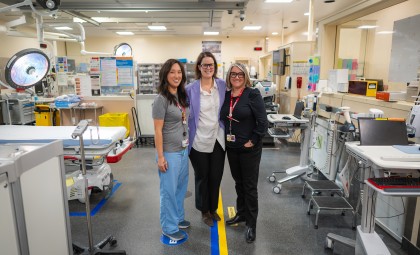
Thank you to the team at Sunnybrook for sharing your safety story with our Subscriber community. There's so much value in sharing learnings in emergency events like these, where our Subscriber community can scale learnings across the Reciprocal. If your organization has a story, reach out to us at [email protected].
When a mass casualty takes place, Ontario turns to Sunnybrook. As Canada’s largest trauma centre, the hospital maintains 24/7 readiness to activate a Code Orange response. From industrial incidents, to senseless violence like the Toronto van attack, teams across Sunnybrook work quickly to assess the severity of the incident and respond to save lives.
On October 14, 2025, a gas explosion at a construction site led to a Code Orange – Mass Casualty Incident – being called at the hospital. Here’s what happened behind the scenes.
The Heads-Up
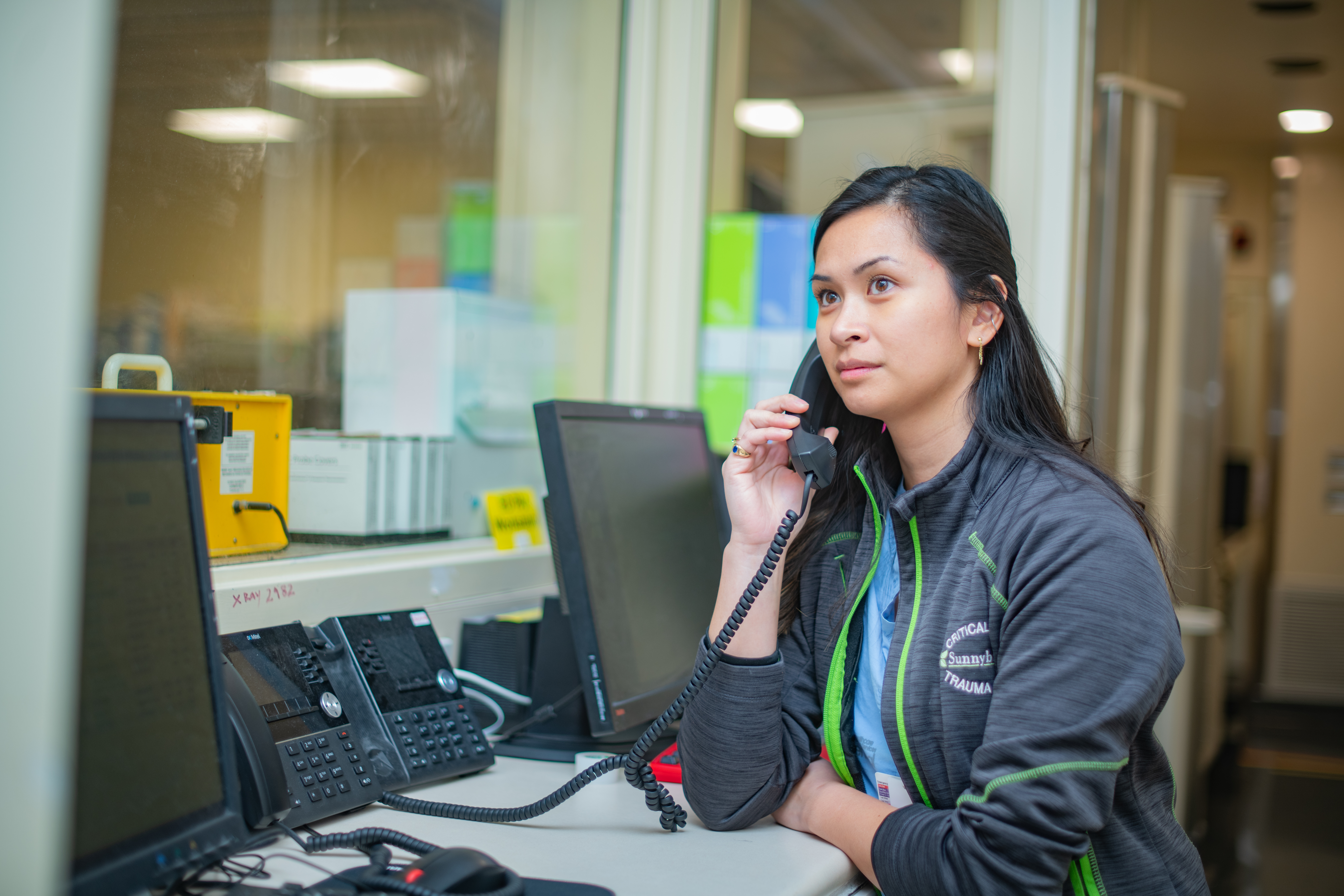
Caitlin Capablanca, Registered Nurse, is pictured in the Emergency Department.
When Caitlin Capablanca answered the phone that morning, her first thought was “of course this would happen on my shift”.
The triage nurse learned from Toronto Paramedic Services that six to 10 patients were injured, mostly burns, in an explosion at a Toronto construction site. Medics hadn’t arrived yet, so no one knew the severity of injuries.
Caitlin admits you never know what will happen during a shift as a nurse covering emergency and trauma care at Sunnybrook. Turns out, October 14, 2025 would be Caitlin’s first Code Orange.
Stuff, People and Space
Caitlin immediately notified her charge nurse, Joy Song, who called the Ross Tilley Burn Centre. “We had no space and needed to start taking action to accommodate these patients,” recalls Dr. Stephanie Mason, Medical Director of the Ross Tilley Burn Centre, the largest burn centre in Canada, providing a wide range of services, from admission to follow-up and reconstructive surgery.
“Getting everything organized is a huge task,” adds Miranda Lamb, Patient Care Manager of Sunnybrook’s Emergency Department. “It comes down to stuff, people and space. ‘Stuff’ covers things like equipment being as close to the patients as possible, and ensuring supplies are fully stocked in the trauma room. People means having the right folks in place at the right time. There were a lot of admissions in the Emergency Department, so we had to think about where to put patients. Space within the Emergency Department and hospital units is often the most challenging.”
'We train like we fight—so when it matters most, we fight like we’ve trained.'
Dr. Mason says Sunnybrook’s strong emergency preparedness strategy means everyone knows their role in a crisis.
“It’s like one big dance. I know where to step. My colleagues on the trauma and emergency side know their roles. Not to mention the enormous team that supports us from every angle, including imaging and labs, and also non-clinical departments like patient flow, security services, patient transport and environmental services.”
With Sunnybrook set to receive the bulk of the patients, the Hospital Emergency Operations Centre, or HEOC, was activated to coordinate the response. Leadership from the Tory Trauma Program, senior leaders at the hospital, and representatives from many supporting services, gathered to tackle how to best care for the new patients, while continuing care for existing patients. Over the course of the day, several calls took place, with over 200 participants working together to make sure patients were cared for seamlessly.
At 10:25 a.m. a Code Orange response was officially called.
Over three hours, Sunnybrook received five injured patients with burns. Toronto Paramedic Services triaged the patients at the scene, and brought the most critical first to stagger their arrival.
“Our team is exceptional at coming together in moments like this, with every member instinctively knowing their role,” says Dr. Avery Nathens, Medical Director of Trauma at Sunnybrook.
“That performance reflects the tireless planning of our emergency preparedness teams and the deep engagement of our clinicians in rigorous drills. We train like we fight—so when it matters most, we fight like we’ve trained.”
The 'Pit Crew'
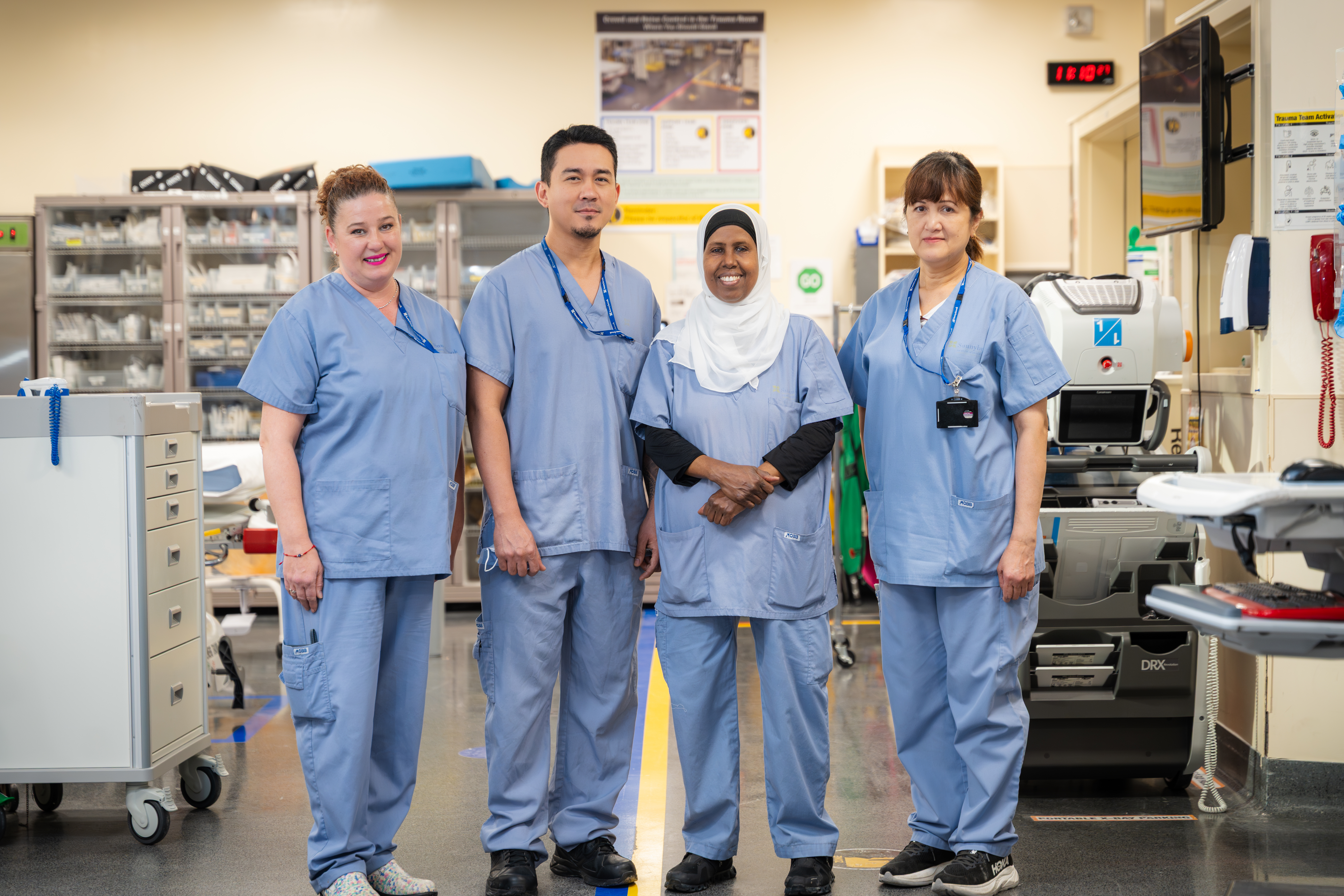
Environmental Service Partners Dina Pacheco, John Guarana, Keya Hassan and Luzviminda Florante.
With dozens of team members in the trauma room, there is an inevitable physical mess following care. “It looks like a hurricane has hit,” says Dr. Alex Hetherington, trauma team leader, who assisted during the Code Orange. “Then, in come our environmental services partners. They’re like a Formula 1 pit crew, it’s all about speed and performance. We’re grateful for the work they do to ensure our space is clean, safe and well-stocked with needed supplies.”
Sunnybrook’s Environmental Services Partners are critical for infection control and patient safety, going beyond basic cleaning to manage waste, maintain facilities, and create healing environments by disinfecting high-touch surfaces and handling biohazards.
Luzviminda Florante was one of four environmental services partners who cleaned the trauma room that day. “It’s an intense scene for us after the lifesaving work of the trauma team takes place. It’s like a strong wind has passed through the trauma room,” explains Luzviminda. “We act quickly and focus, as the bay is needed immediately for the next patient. I can say our team never does less than what is needed, and it’s something I’m very proud of.”
Where Is My Loved One?
During the code, and beyond, Sunnybrook social workers Sally Elders and Jasmine Segal acted as a bridge between the organized clinical chaos of a Code Orange and the needs of patients and their families, making sure they weren’t lost in the shuffle.
Together, they supported families as they arrived, identified patients who arrived to the hospital as unidentified and provided crisis trauma-informed counselling to patients, family members and others who were part of the patients’ support circles. In addition, Sally and Jasmine worked with community partners, Toronto Police Services and security services at Sunnybrook. Their response extended beyond the initial day, with ongoing care and support provided to patients, families, and staff throughout the week.
“The whole Sunnybrook team demonstrated great communication and awareness of each other’s roles – people stepped in where they were needed and went above and beyond their assigned tasks,” says Sally Elders, a social worker in Sunnybrook’s Emergency Department.
Jasmine Segal, a social worker in the Ross Tilley Burn Centre, agrees, adding the care and support to patients, families and staff continued through the week. “It was an emotional, impactful week that exemplified the strength of interprofessional team members stepping in wherever needed to support patients, families, and one another,” adds Jasmine.
For Staff, It's More Than Just One Day
While a Code Orange comes and goes, and news of mass casualty incidents fade from news headlines, the impact on staff can linger.
“I’m often told, ‘this is your job’,” says Miranda Lamb, patient care manager in Sunnybrook’s Emergency Department. “It’s more than that though. Our emergency and trauma teams see severely injured people who will have their lives forever altered. It can take a toll, especially in cases like the Toronto van attack when there’s violence. There’s a psychological impact.”
To support teams, Sunnybrook’s Spiritual Care team holds weekly drop-in sessions, and regular huddles on units to check-in with nurses, physicians and allied health team members.
“It’s important to take time to recognize the impact of our work. We do an amazing job here, but each individual has a personal response. We’re human,” says Miranda Lamb.
If your organization has a story, reach out to us at [email protected]. Through partnership and sharing lessons learned like these, we can create the safest healthcare system.